
It refers to the process of spreading out the cost of an asset over a period of time. This can be useful for businesses and individuals who want to make large purchases but cannot afford to pay for them all at once. Most people use “amortization schedule” in the context of loans, where it outlines how a loan is paid down over time. It details Outsource Invoicing the total number of payments and the proportion of each that goes toward principal versus interest.
How to Find Operating Cash Flow (OCF)
Accumulated amortization is a useful mechanism to evaluate the value of intangible assets and their usefulness to the firm. However, the point to note is that not all intangible assets can be amortized. These methods help evaluate the competitive edge that a firm gains compared to its peers and how it can use it to present its financials in a better way to its shareholders.
- A proper format can also help avoid accounting errors and help you maintain clean records.
- For example, let’s say a company purchased a patent with a cost of $100,000.
- This reduces the asset’s book value and recognizes the expense on the income statement.
- The Internal Revenue Service (IRS) rule requires that you use the cost method when dealing with timber.
- Alan will subtract amortization expense and credit accumulated amortization for $1,000 after the first year (total purchase price divided by useful life in years).
- Sometimes, amortization also refers to the reduction in the value of a loan.
agree to the Terms and Conditions.
Accumulated amortization is a contra asset account because it reduces the book value of the intangible asset. The book value is the original cost of the asset minus any accumulated amortization. The contra asset account is used to lower the book value of the intangible assets reported on the balance sheet at historical cost. Both Fixed assets and intangible assets are capitalized when they are purchased and reported on the balance sheet. Instead, the assets’ costs are recognized ratably over the course of their useful life.
Managing tangible and intangible assets
By following the steps outlined in this guide, businesses can ensure compliance with accounting standards and effectively manage their intangible assets. Understanding the principles of amortization and applying them correctly enables companies to reflect the true value of their assets and make informed financial decisions. Amortization is a vital accounting concept that reflects the gradual reduction in the what is accumulated amortization value of intangible assets over time.
- By mastering these concepts, you will be well-prepared for your Canadian accounting exams and equipped to handle real-world accounting challenges.
- In this respect, there is an advantage in organizing the chart of accounts with a higher initial level of detail.
- Amortization expense is debited while the accumulated amortization account is credited in a typical balance sheet entry.
- Shaun Conrad is a Certified Public Accountant and CPA exam expert with a passion for teaching.
- The oil well’s setup costs can therefore be spread out over the predicted life of the well.
Sum-of-the-Years’-Digits Method
- The sum-of-the-years digits method is an example of depreciation in which a tangible asset such as a vehicle undergoes an accelerated method of depreciation.
- When it comes to journal entries and making sure everything’s lining up correctly, your accountant is an incredible resource.
- It reflects as a debit to the amortization expense account and a credit to the accumulated amortization account.
- It also provides valuable information for stakeholders in assessing the financial position and performance of a company.
- When an asset is purchased, the average useful life (period in which it will be used in business) is calculated.
- Thomson Reuters Fixed Assets CS has the tools to help firms meet all of a client’s asset management needs.
The annual journal entry is a debit of $10,000 to the amortization expense account and a credit of $10,000 to the accumulated amortization account. The purpose of amortization is to match the cost of acquiring intangible assets with the periods over which they provide value to the business. It recognizes that the economic benefits derived from intangible assets are typically spread over several accounting periods rather than being realized immediately. Alan will subtract amortization expense and credit accumulated amortization for $1,000 after the first year (total purchase price divided by useful life in years). Every year, Alan will make this journal entry to record the current amortization expense and the total expense throughout the asset’s life.
What is Depreciable Property?
As the loan is paid off over time, the interest component of the payment decreases, while the principal component increases. This expense will continue to be part of the balance sheet till 2029 post, which is completely amortized. Modern accounting software simplifies the process of recording and managing amortization. Accumulated amortization affects both the income statement and the balance sheet.
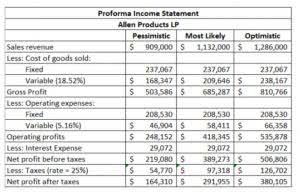
VARIANCE REPORT: Detailed Guide To Variance Reporting

Just head to the My Accountant menu to get started, then select Find a pro to help. What makes depletion similar to depreciation is that they are both cost recovery system for tax reporting and accounting. The depletion deduction enables an individual to account for the product reserves reduction. Accumulate amortization in both accounting and tax might have the same sum of have different sums.
Properly Disclosing in Financial Statements
Liabilities are the obligations of the company, and they can also be classified into current liabilities (due within one year) and non-current liabilities (due after one year). Equity represents the residual interest in the assets online bookkeeping after deducting liabilities. Accumulated amortization diminishes retained earnings and so has an impact on net income. For example, a 50 million dollar amortized value reduces the revalue of retained earnings by the same amount. There are mainly two effects of amortization in the financial statements.

Each year, the updated accumulated total will be noted down on the balance sheet, and the present expense will be reflected on the income statement. An amortization schedule is a chart that tracks the falling book value of a loan or an intangible asset over time. For loans, it details each payment’s breakdown between principal and interest.
Many countries that follow GAAP and IFRS require amortization of intangible assets to ensure compliance. Noncompliance with these regulations may result in penalties or legal challenges. Therefore, proper amortization practices are essential for maintaining good standing. Knowing how much an intangible asset will be amortized each year helps businesses with budgeting and financial forecasting.